
Diethanol Isopropanolamine (DEIPA) 85%, chemically named 2-[Bis(2-hydroxyethyl)amino]-1-propanol, is an important alkanolamine compound widely used in industrial applications. DEIPA 85% has established an irreplaceable position in the construction materials industry due to its high grinding aid efficiency, excellent strength-enhancing performance, environmentally friendly and low-toxicity profile, as well as its good compatibility with various formulation components.
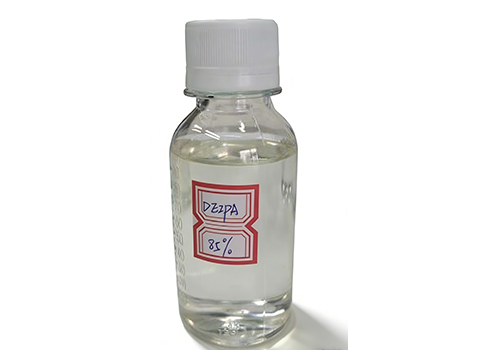
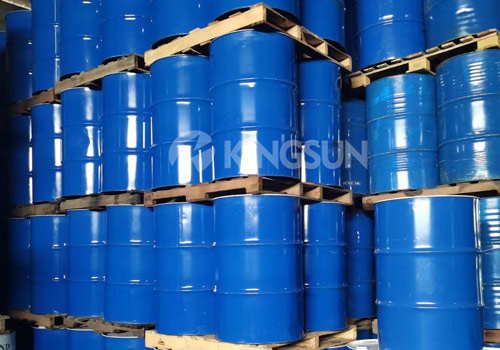
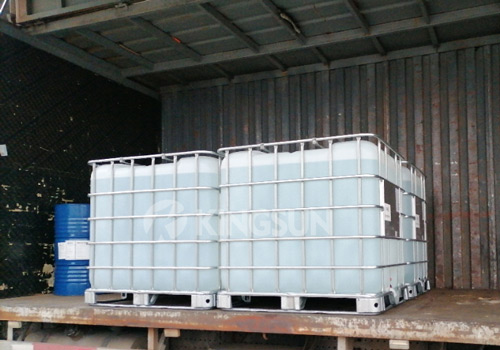
- Product: Diethanol Isopropanolamine 85%
- Form: Colourless to slight yellow liquid
- Diethanol Amine: ≤2.0%
- Molecular Formula: C7H17O3N
- CAS NO.: 6712 – 98 – 7

With these advantages, DEIPA 85% is especially suitable for green cement and concrete formulations. It helps improve performance and workability. It supports reduced clinker content and lowers environmental impact. As a result, DEIPA represents the mainstream upgrade of alkanolamine-based grinding aids. It promotes sustainable and low-carbon development in the building materials industry.
| Items | Diethanol Isopropanolamine (DEIPA) |
| Assay Content %(m/m) | ≥85.0% |
| Diethanol Amine | ≤2.0% |
| Water Content | ≤15.0% |
| Specific Gravity | 1.083 g/ml(20℃) |
| Viscosity | 310 mPa·s (25℃) |
| Flashing Point | ≥160℃ |
| Refractive index | 1.463-1.465(20℃) |
| Stability | Stable at room temperature |
Main Features of Diethanol Isopropanolamine (DEIPA)
- Excellent Grinding Aid and Energy-Saving Performance. DEIPA diethanol isopropanolamine 85% significantly reduces electrostatic adhesion and particle agglomeration during cement grinding, resulting in more uniform material dispersion and higher grinding efficiency. Its use effectively improves material flow within the mill, minimizes ineffective grinding, and enhances overall grinding performance. Practical applications have shown that DEIPA 85% can increase throughput on cement production lines while noticeably reducing specific energy consumption, offering a comprehensive advantage in energy efficiency and cost savings.
- Outstanding Strength-Enhancing Capability. DEIPA 85% exhibits a strong activation effect on supplementary cementitious materials such as slag and fly ash, promoting hydration reactions and optimizing the structure of hydration products. It effectively improves both early and long-term cement strength, with particularly notable benefits for late strength development. Compared with conventional alkanolamines, DEIPA chemical not only ensures early strength development but also supports continuous growth of long-term strength, resulting in cement products with more stable and balanced mechanical properties.
- Excellent Process Adaptability and Stability. The product demonstrates robust adaptability across different raw material conditions, grinding processes, and cement types. Whether used alone or in combination with other common grinding aid components, it maintains stable performance without adverse interactions. This strong process compatibility allows DEIPA 85% to be applied across various production lines and technological routes, reducing operational complexity and adjustment requirements.
- Superior Compatibility and Formulation Flexibility. The molecular structure of DEIPA 85% contains both hydroxyl and amine groups, providing excellent compatibility with a wide range of organic additives and admixture systems. It can be used synergistically with alcohols, amines, esters, and other compounds, enhancing performance in blended grinding aids or admixture formulations. This allows for flexible formulation optimization and performance customization to meet specific customer requirements.
- Support for Low-Clinker and Green Production Systems. In low-clinker cement and green building material systems, DEIPA 85% activates the latent reactivity of supplementary materials, helping to maintain strength while reducing clinker content. This not only lowers production costs but also effectively reduces CO₂ emissions, aligning with the construction materials industry’s move toward energy efficiency, low carbon, and sustainable development.
- Stable Physicochemical Properties and Safe Handling. This chemical has excellent chemical stability, maintaining its performance under normal storage and usage conditions without decomposition or degradation. Its good flowability and ease of dosing facilitate accurate and continuous application in industrial production. When used according to standard procedures and safety guidelines, diethanol isopropanolamine (DEIPA) is suitable for long-term, stable application in cement and related industrial fields.
-
Main Applications
-
Recommended Dosage
1. Cement Grinding Aid (Core Application)
DEIPA 85% is one of the most mature and effective amine-based grinding aids and strength activators in the cement industry, widely used in both clinker grinding and composite cement systems.
- In terms of grinding performance, DEIPA 85% effectively reduces particle agglomeration during cement milling, improves material flowability, and enhances the action of grinding media, resulting in significantly higher grinding efficiency. Industrial applications have shown that the use of DEIPA 85% can increase grinding efficiency by approximately 10–20%, reduce specific energy consumption, and improve throughput, helping to lower overall production costs.
- Regarding strength activation, DEIPA chemical exhibits excellent activation of supplementary cementitious materials such as slag and fly ash, particularly in composite and low-clinker cement systems. It can enhance early cement strength by 3–5 MPa and improve medium-to-late strength by 4–8 MPa. Compared with traditional TEA (triethanolamine), DEIPA offers superior late strength development; compared with TIPA (triisopropanolamine), it delivers more stable long-term strength and better overall cost-performance.
- For compatibility and adaptability, diethanol isopropanolamine (DEIPA) works well with a wide range of common grinding aid components and can be used in combination with alcohols, amines, esters, or alone as a grinding aid and strength modifier. It is flexible for different raw materials, milling processes, and cement types.
When used as a cement grinding aid, DEIPA 85% is typically added based on the weight of clinker or finished cement. The recommended dosage generally falls between 0.01% and 0.05%. This range allows DEIPA to enhance particle dispersion, boost grinding efficiency, lower energy consumption, and support both early and long-term cement strength development.
For cement systems with high proportions of supplementary cementitious materials such as slag or fly ash, slightly higher dosages are often applied, usually between 0.02% and 0.06%, depending on material reactivity and the desired strength performance.
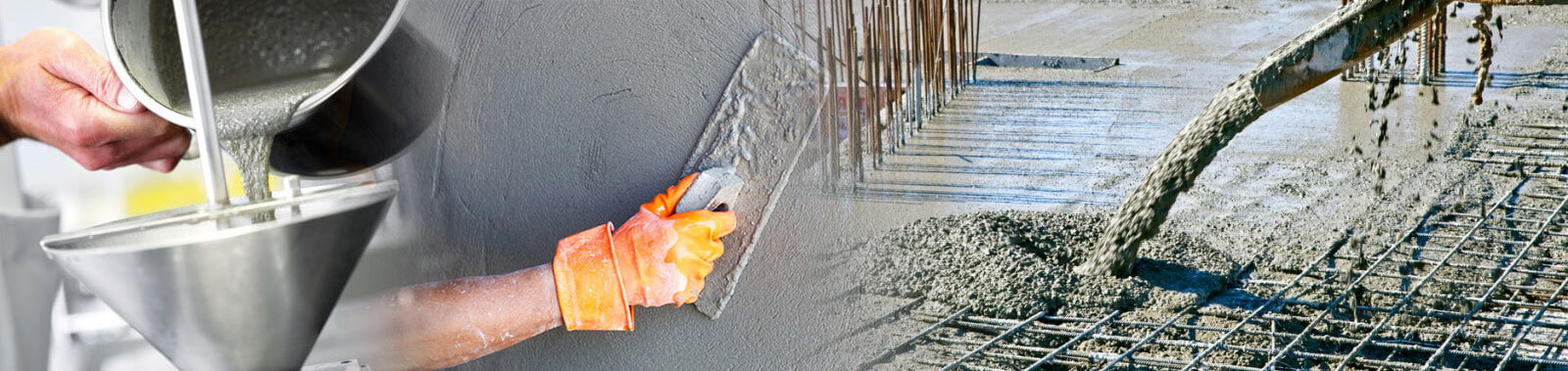
DEIPA 85% is an effective functional component in concrete admixtures, improving workability, flowability, and uniformity of fresh concrete while enhancing the density and durability of hardened structures.
In green, low-carbon concrete formulations, diethanolisopropanolamine activates supplementary cementitious materials, enabling reduced clinker content without compromising strength or performance. This supports energy savings, lower carbon emissions, and the construction industry’s sustainable development goals.
Beyond cement and concrete, DEIPA 85% is a versatile chemical with broad industrial applications. Its amine and hydroxyl groups provide multifunctional properties, making it suitable for use in surfactants, textile antistatic agents, cosmetic emulsions, and dispersants for coatings and inks.
DEIPA also plays a key role in gas purification, effectively absorbing acidic gases such as H₂S and CO₂ in natural gas treatment and flue gas desulfurization processes.
In lubricants and metalworking fluids, it enhances anti-wear, extreme-pressure, and corrosion-resistant performance. Additionally, DEIPA serves as an intermediate in pharmaceutical and pesticide synthesis and as a functional modifier in resin, coating, and adhesive systems.
Market Outlook of DEIPA 85%
The cement and construction materials industry is increasingly moving toward high-efficiency, low-carbon, and green solutions. DEIPA 85%—a high-performance alkanolamine grinding aid and strength activator—has seen steadily growing market demand. It offers clear advantages in improving cement grinding efficiency. It activates supplementary cementitious materials such as slag and fly ash. It also enhances the workability and durability of concrete. DEIPA is particularly well suited for low-clinker cements and green concrete formulations.
Global energy-saving and emission reduction policies are driving demand for safe, low-toxicity, and efficient chemical additives. With stable performance and excellent compatibility, DEIPA 85% has become an indispensable raw material in cement and concrete admixture systems. Its application scope and market potential continue to grow alongside green building materials and sustainable construction.