
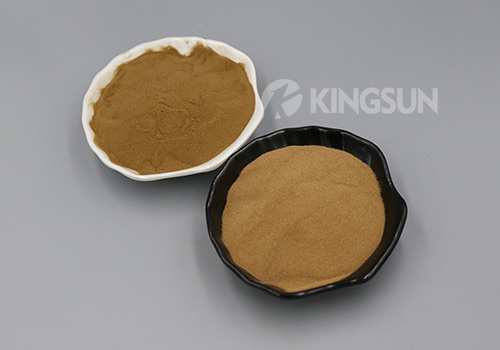
Sodium naphthalene sulfonate formaldehyde (SNF), also known as SNF superplasticizer, naphthalene-based superplasticizer, sodium naphthalene, naphthalene sulfonate, poly naphthalene sulfonate (PNS), sodium naphthalene formaldehyde, sulphonated naphthalene formaldehyde, or naphthalene sulfonate formaldehyde (NSF), is a chemically synthesized, non-air-entraining high-efficiency water reducer. It typically appears as a light brown powder.
As a concrete superplasticizer, SNF powder provides strong dispersion of cement particles and a water reduction rate of 15%–25%. As a result, it is widely used in the construction industry. It is particularly suitable for large-flow concrete, cast-in-place concrete, and prefabricated components that require early strength or high strength. In these applications, sodium naphthalene can improve concrete workability and support the development of strength and other performance properties. eyond concrete applications, SNF superplasticizer also finds use in various industries, including agriculture, plastics and rubber, papermaking, textiles, and petroleum.
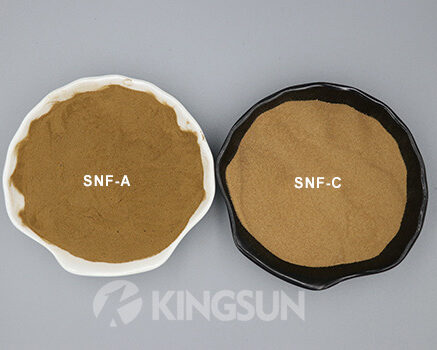 SNF Powder
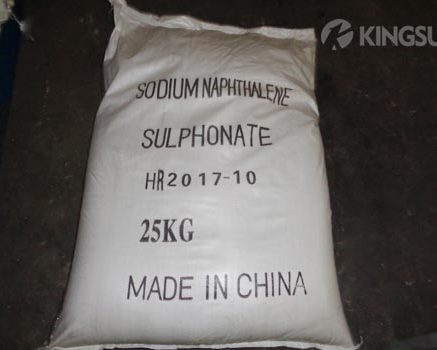 Sodium Naphthalene Sulfonate
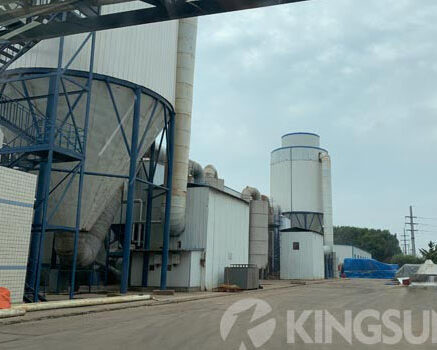 Kingsun Factory
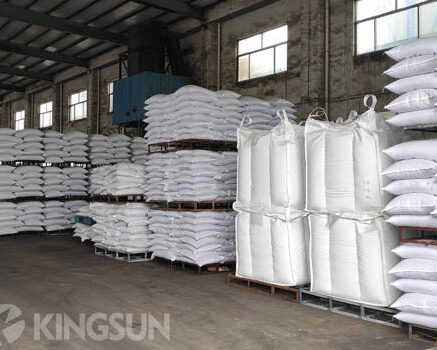 SNF Superplasticizer Warehouse
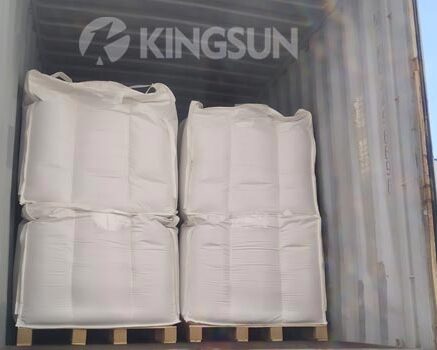 Sodium Naphthalene Powder to Israel
- Product: Sodium Naphthalene Sulfonate
- Appearance: Light Brown Powder
- Type: SNF-A, SNF-B, SNF-C
- Solid Content (%) ≥: 92
- PH Value: 7~9
- CAS No.: 36290-04-7
- HS Code: 38244010

Sodium Naphthalene Sulfonate in Concrete
Naphthalene series superplasticizers and other chemical admixtures play an important role in modern concrete materials and technologies. They can improve various concrete properties and support the development of advanced concrete technologies. In addition, when used together with mineral admixtures, sodium naphthalene sulfonate-formaldehyde can support the utilization of industrial by-products, such as ground granulated slag and fly ash, in cementitious systems. This approach helps reduce the consumption of conventional resources and supports more sustainable concrete production. Looking ahead, the continued development of cost-effective and environmentally compatible materials and technologies may expand the role of naphthalene-based superplasticizers in concrete production.
Sodium naphthalene sulfonate is readily soluble in water, ethylene glycol, and diethylene glycol. It is slightly soluble in alcohols and insoluble in organic solvents. In the construction industry, sodium naphthalene sulfonate is widely used to produce free-flowing and pumpable concrete mixtures. As a leading manufacturer of construction chemicals in China, Kingsun offers three types of naphthalene sulfonate powder: SNF-A, SNF-B, and SNF-C. Each grade has different technical specifications, as shown in the table below.
Product Specifications of SNF Superplasticizer
| Type | SNF-A | SNF-B | SNF-C |
| Solid Content (%) ≥ | 92% | ||
| PH Value | 7-9 | ||
| Na2SO4 Content (%)≤ | 5 | 10 | 18 |
| Chlorine Content (%)≤ | 0.3 | 0.4 | 0.5 |
| Net Starch Fluidity(mm)≥ | 250 | 240 | 230 |
| Water Reducing Rate(%) | 26 | 25 | 23 |
| Packing | 25kg pp bag; 650kg Jumbo bag. A customized package is available. | ||
- Performance Characteristics
- Applications of SNF
- How to Use SNF
High Water Reduction Rate. The water reduction rate of sodium naphthalene can reach 25%. Its strong plasticizing effect improves concrete fluidity while reducing bleeding and segregation. As a result, it enhances workability and makes concrete easier to place and compact.
Good Strength Development. When the cementitious material content remains the same, concrete containing a high-efficiency water reducer can achieve 1d, 3d, 7d, and 28d compressive strength increases of 50–110%, 40–90%, 40–70%, and 20–40%, respectively, compared with benchmark concrete at the same ages.
Improved Workability. Adding SNF powder to concrete improves workability and can reduce cement consumption. At the same time, better workability can facilitate concrete placement and help accelerate construction progress.
Reduced Cement Consumption. When concrete maintains approximately the same strength and slump, SNF superplasticizer can reduce cement consumption by 10–25%.
Strong Adaptability. SNF superplasticizer works with various cement types and grades and shows good compatibility with many other admixtures. For example, it can work together with expansion agents, air-entraining agents, fly ash, and other active mineral admixtures, allowing their functions to complement each other. The product also has little effect on the initial and final setting times of cement, with the setting time difference generally within 1 hour.
Low Sodium Sulfate Content. SNF superplasticizer can be formulated as a liquid that remains free from crystallization during winter. This helps reduce pipeline blockage caused by sodium sulfate crystallization during winter concrete production and facilitates cold-weather construction. In addition, when combined with suitable retarding components, it can help reduce concrete slump loss over time.
Good Durability. SNF superplasticizer can improve the pore structure of concrete and thereby enhance properties such as impermeability, carbonation resistance, and freeze-thaw resistance. This makes it suitable for concrete applications that require improved long-term durability.
Good Safety Performance. The product is non-toxic, non-irritating, and non-radioactive under normal use. It does not contain substances known to promote steel corrosion and is classified as non-flammable and non-explosive.
Easy to Use. SNF superplasticizer can be added directly to concrete or dissolved in water before use as a liquid admixture. Therefore, it can adapt to different construction conditions and mixer configurations.
This chemical is compatible with a wide range of cement types, including Portland cement, ordinary Portland cement, Portland slag cement, and Portland fly ash cement.
It performs well in various concrete formulations, including high-strength concrete, high-performance concrete, steam-cured concrete, high-fluidity concrete, and pumped concrete. It is also suitable for concrete construction during winter, when low temperatures can affect setting and hardening.
Kingsun SNF superplasticizer is widely used in construction projects such as highways, bridges, tunnels, water conservancy and hydropower facilities, ports, docks, high-rise buildings, power engineering projects, industrial and civil buildings, and prestressed concrete components.
(1) Understand the Product Characteristics
SNF superplasticizer can improve concrete fluidity and workability while reducing water demand and supporting strength and durability. Before application, carefully review the product specifications to understand its performance, recommended dosage, mixing method, and handling precautions.
(2) Determine the Dosage
Select the SNF dosage according to the concrete formulation, test conditions, and required water-reduction level. In general, the dosage of SNF-based admixture ranges from 0.5% to 1.0% of cement weight, with 0.7% serving as a typical starting point. Conduct laboratory trials to determine the appropriate dosage for each specific mix.
(3) Prepare an Aqueous Solution
For solution dosing, dissolve the SNF powder in water at the specified dosage and mix until the solution becomes uniform. Add the prepared solution to the concrete mixer together with the mixing water during concrete production.
(4) Use Dry Dosing
For dry dosing, add the SNF powder directly to the mixer along with cement, aggregates, and other dry materials. Allow sufficient mixing time to distribute the admixture evenly throughout the concrete mixture.
(5) Mix Thoroughly
Regardless of the dosing method, ensure uniform distribution throughout the concrete. Adjust the mixing time as needed to achieve thorough dispersion. Use accurate weighing equipment and strictly control the dosage during production to maintain consistent concrete performance.
(6) Check Compatibility with Other Admixtures
Avoid mixing SNF with other types of concrete admixtures unless compatibility has been confirmed through specific tests. Different admixtures may interact with each other and affect concrete workability, setting time, or other properties.
(7) Control Construction and Curing
During transportation and placement, take appropriate measures to minimize concrete segregation and bleeding. Adjust the slump and other concrete properties according to project requirements. After placement, maintain suitable curing conditions to support normal hardening and strength development.
Based on the table, SNF superplasticizer provides a substantially higher water-reduction rate and greater strength improvement than conventional water reducers, making it suitable for medium- and high-strength concrete applications.
Compared with polycarboxylate ether (PCE) superplasticizer, SNF generally offers a lower material cost, at approximately half the cost of PCE. However, it typically provides a lower water-reduction rate and shorter slump-retention time. Therefore, SNF can be a practical choice for projects that require a balance between concrete performance and material cost, including C30–C80 concrete applications.
By contrast, PCE superplasticizer provides stronger water-reduction performance and longer slump retention. These characteristics make it well suited to high-performance concrete projects that require ultra-high strength or extended workability, particularly applications above C80 or those requiring slump retention for more than 3 hours.
Item | SNF Superplasticizer | Ordinary Water Reducer(lignin sulfonate) | PCE Superplasticizer |
Water reduction rate | 18%-30% | 8%-12% | 25%-40% |
Strength improvement (28d) | 25%-45% | 5%-15% | 30%-50% |
Slump retention rate (2h) | More than 75% | 50%-60% | More than 85% |
Applicable strength grade | C30-C100 | C15-C30 | C40-C120 |
Cement adaptability | Good(adaptability test required) | Good(strong compatibility) | Excellent (compatible with most cements) |
Cost (relative value) | 1.0 | 0.5-0.6 | 2.0-2.5 |
Environmental protection | Low formaldehyde residue (<0.1%) | Formaldehyde-free, environmentally friendly | Formaldehyde-free, optimal environmental protection |
Naphthalene and Naphthalene Derivatives. These serve as the primary raw materials for producing naphthalene-based water-reducing agents and typically come from coal tar distillation. Industrial naphthalene generally requires a purity of at least 95%, as impurities can affect the sulfonation and condensation reactions. Higher purity supports more complete reactions and helps maintain consistent product quality and concrete performance.
Concentrated Sulfuric Acid. Sulfuric acid acts as the sulfonating agent. It introduces sulfonic acid groups (-SO₃H) into the naphthalene structure to produce naphthalenesulfonic acid. During this process, manufacturers need to carefully control its concentration and dosage. Insufficient concentration may result in incomplete sulfonation, while excessive concentration can promote side reactions and increase impurity levels, potentially reducing the dispersing performance of the finished admixture.
Formaldehyde. Formaldehyde serves as the condensing agent in the synthesis process. It reacts with naphthalenesulfonic acid to form polymeric condensates with longer molecular chains. Manufacturers commonly use formaldehyde as a 37% aqueous solution. Therefore, its quality and dosage influence the condensation rate and molecular weight distribution, which can affect the dispersibility and retention performance of the final product.
Sodium Hydroxide or Calcium Hydroxide. These alkaline materials mainly serve as neutralizing agents. They neutralize the acidic products formed during sulfonation and condensation to produce a water-soluble naphthalene sulfonate-formaldehyde condensate with a neutral or mildly alkaline pH. As a result, the type, dosage, and addition rate of the neutralizer determine the final pH and can influence concrete setting behavior and strength development.
1. Raw Material Selection and Preparation
The main raw materials for SNF powder include naphthalene, formaldehyde, and sulfonating agents. Manufacturers should source these materials from reliable suppliers that provide high purity and consistent quality. Before production, workers pretreat the raw materials by removing impurities and adjusting particle size. These steps help maintain a stable reaction process and consistent product quality.
2. Mixing and Reaction
Manufacturers accurately weigh each raw material according to the established formulation to maintain the required ingredient ratio. They then transfer the prepared materials into a mixer for preliminary blending, which promotes uniform dispersion.
Under controlled temperature, pressure, and catalyst conditions, the raw materials react to form intermediates with water-reducing properties. During this stage, manufacturers closely monitor temperature, reaction time, and stirring speed. Proper control of these parameters helps achieve a complete reaction and stable product quality.
3. Polymerization and Modification
The intermediates undergo polymerization under controlled conditions to form polymeric compounds. Manufacturers adjust factors such as temperature, pressure, and reaction time to obtain the desired molecular structure and performance.
Once polymerization reaches the required stage, manufacturers may modify the material to improve its water-reducing performance and adaptability to different concrete systems. The type and dosage of modifier depend on the target product specifications and application requirements.
4. Crushing and Screening
Crushing: After polymerization and modification, the material typically forms blocks or granules. A crusher breaks the material into fine powder. Operators control the crushing size to meet the required product specifications.
Screening: The crushed powder then passes through a screening process. The screen removes oversized particles and unwanted impurities while helping maintain a uniform particle size and consistent product quality.
5. Drying and Packaging
Drying: After screening, the powder enters a dryer to remove residual moisture and volatile substances. Operators control the drying temperature and time to prevent overheating and maintain the desired product properties.
Packaging: Finally, manufacturers pack the dried SNF powder in well-sealed packaging to protect it from moisture and contamination. Workers inspect the packages during this stage to check for damage, leakage, or other defects before storage and shipment.
Leading Sodium Naphthalene Manufacturer in China
As one of the professional concrete admixture manufacturers and suppliers in China, Henan Kingsun Chemical Co., Ltd. has focused on researching and producing various types of water-reducing admixtures for more than 15 years. Over the years, the company has developed a diverse product range, including sodium gluconate for concrete retardation, high-range concrete superplasticizers such as sodium naphthalene sulphonate and polycarboxylate superplasticizer, and conventional water-reducing agents such as sodium lignosulfonate and calcium lignosulfonate. In addition, Kingsun supplies other construction chemicals to meet different application requirements.
1. Strong Production and R&D Capabilities
To support consistent production, Kingsun operates its own factory with fully automated production lines, an R&D center, and a quality inspection center. At the same time, a professional sales team provides customers with support during product selection, order processing, and after-sales service.
2. Stable Supply and Fast Delivery
In terms of supply, Kingsun maintains large warehouse capacity and sufficient inventory to support stable product availability and fast delivery. As a result, the Kingsun brand has established a presence in both domestic and international markets, with many overseas customers developing long-term business relationships with the company.
3. Extensive Export Experience
With years of international business experience, Kingsun has exported its concrete superplasticizers to more than 30 countries and regions, including Mexico, Israel, Qatar, Bahrain, Pakistan, Chile, Brazil, Turkey, Saudi Arabia, the United Arab Emirates, South Africa, Jordan, Russia, Peru, Bangladesh, South Korea, Indonesia, Thailand, the Philippines, Vietnam, Malaysia, Singapore, and India. Through these markets, the company has gained experience serving customers with different product requirements and application conditions.
4. Competitive Products and Professional Service
Finally, Kingsun provides concrete superplasticizers with consistent quality, competitive factory prices, and professional customer service. For customers looking for SNF superplasticizer, the company can provide product specifications, dosage recommendations, pricing information, and other technical details. If you would like to learn more, please contact Kingsun for further information and cooperation opportunities.