
SNF-A powder, also known as sodium naphthalene sulfonate formaldehyde condensate, is a naphthalene-based high-efficiency water reducer. It plays a key role in the building materials industry, particularly as a concrete admixture. Its core ingredient, sodium naphthalene sulfonate formaldehyde condensate, is polymerized through a specific process, resulting in the product’s exceptional performance.
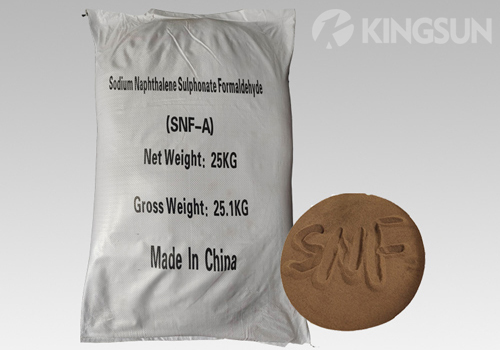
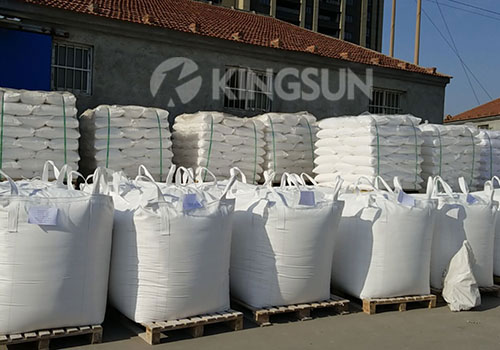
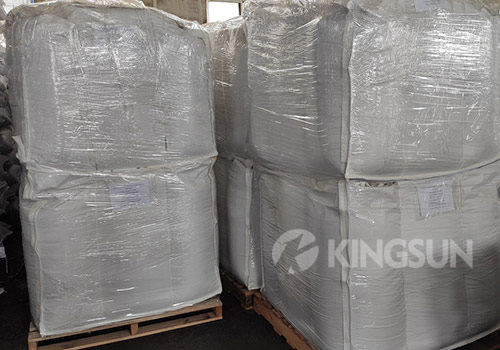
- Product: SNF-A
- Appearance: Light Brown Powder
- Solid Content (%) ≥: 92
- Na2SO4 Content (%)≤: 5
- PH Value: 7~9
- Water Reducing Rate(%): 26
- CAS No.: 36290-04-7

In terms of appearance, the normal color of SNF-A powder ranges from pale yellow to brownish yellow, with a uniform hue and no noticeable color variation. This color originates from the molecular structure of its core ingredient, sodium naphthalenesulfonate formaldehyde condensate. The absorption properties of visible light by the long-chain molecules formed by the sulfonation and condensation of naphthalene rings determine its basic hue.
Product Specifications of SNF Superplasticizer
| Type | SNF-A | SNF-B | SNF-C |
| Solid Content (%) ≥ | 92% | ||
| PH Value | 7-9 | ||
| Na2SO4 Content (%)≤ | 5 | 10 | 18 |
| Chlorine Content (%)≤ | 0.3 | 0.4 | 0.5 |
| Net Starch Fluidity(mm)≥ | 250 | 240 | 230 |
| Water Reducing Rate(%) | 26 | 25 | 23 |
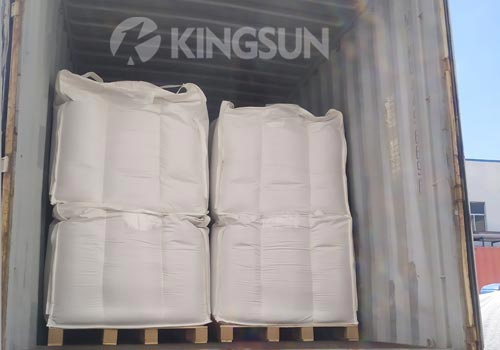
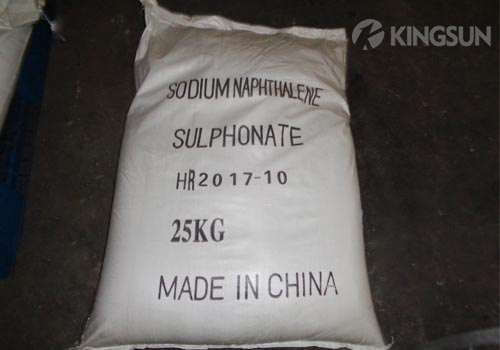
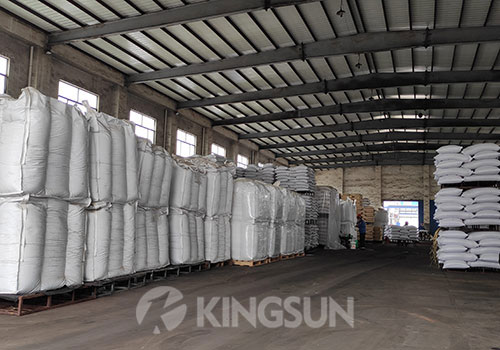
| Packing | 25kg pp bag; 650kg Jumbo bag. A customized package is available. | ||
Performance Characteristics of SNF-A
(1) High Water-Reduction Rate. At a dosage of 0.5%–1.2% based on cement weight, this admixture can reduce mixing water by 20%–30%. This performance exceeds that of many conventional water-reducing agents. For example, C40 concrete may require around 180 kg of water per cubic meter without a water reducer. With an appropriate dosage, water consumption can decrease to approximately 126–144 kg/m³. As a result, the lower water-cement ratio can support higher concrete strength and durability.
(2) Strength Development. Its strong water-reducing performance helps lower the water-cement ratio and promote concrete strength development. Under the same workability and cement content, concrete with the admixture may achieve higher early and later strength. Depending on the mix design and curing conditions, typical increases may reach 50%–70% at one day, 40%–60% at seven days, and 25%–45% at 28 days. Strength can continue to develop at 90 and 180 days.
(3) Broad Cement Compatibility. The product works with various cement types, including ordinary Portland cement, Portland slag cement, and fly ash cement. In addition, it can work alongside other concrete admixtures, such as retarders, early-strength agents, and air-entraining agents. This flexibility allows engineers to adjust concrete formulations according to specific project requirements.
(4) Good Workability Retention. This admixture improves concrete workability and can increase initial slump by approximately 120–220 mm. Under suitable conditions, the concrete can retain more than 75% of its slump for 1.5–2.5 hours. Therefore, it can help control slump loss during long-distance transportation and extended placement. It also improves cohesiveness and water retention, helping reduce segregation and bleeding. A typical bleeding rate can remain at ≤1.5%, which supports a smoother surface and denser internal structure after hardening.
(5) Improved Concrete Durability. By lowering the water-cement ratio, the admixture helps increase concrete density and reduce permeability. Test results may show improvements in impermeability, freeze-thaw resistance, carbonation resistance, and chloride-ion resistance, depending on the formulation and test conditions. These characteristics make it suitable for demanding environments, including coastal areas and cold regions. Combined with an appropriate concrete mix design and curing process, it can help reduce risks such as reinforcement corrosion and freeze-thaw damage.
-
Primary Applications
-
Precautions for Use
High-Strength and Ultra-High-Strength Concrete Projects. SNF-A powder supports concrete applications that require high compressive strength and a low water-cement ratio. Typical projects include core tubes for high-rise buildings, main beams for long-span cable-stayed bridges, and high-strength prestressed pipe piles. By improving cement particle dispersion and reducing water demand, the product helps achieve higher strength while maintaining good workability. For high-strength concrete, engineers can adjust the dosage according to the target strength, cement type, and mix design.
Critical Parts of Mass Concrete Structures. Large-volume concrete structures, such as nuclear power plant foundations, hydropower dams, and large raft slabs, require effective control of hydration heat and thermal cracking. The admixture helps reduce water demand and improve cement dispersion. As a result, SNF-A can promote a denser concrete structure and better crack resistance. In addition, engineers can combine it with suitable setting-control measures to meet the requirements of mass concrete construction.
Ready-Mixed Concrete Production. In ready-mixed concrete plants, this water-reducing admixture supports the production of concrete in grades such as C30-C60. It improves cement dispersion and helps maintain suitable workability with lower water consumption. Furthermore, manufacturers can adjust the dosage according to cement characteristics, mix proportions, and production requirements. Liquid formulations can also work with automated dosing systems, making them suitable for large-scale concrete production.
Precast Concrete Components. Precast products such as composite slabs, shear walls, and railway track slabs require good early strength, dimensional stability, and surface quality. The product helps reduce water demand and improve concrete compactness. Therefore, it can support faster strength development and more efficient mold turnover. In addition, better cement dispersion can contribute to a smoother concrete surface and improved appearance.
Concrete in Special Environments. This admixture also supports concrete applications that require enhanced durability. These include coastal bridges, northern-region rail transit projects, and underground utility corridors. By reducing water demand and improving concrete compactness, it can help reduce permeability and support resistance to chloride penetration, freeze-thaw cycles, and water ingress. Therefore, engineers can combine it with other suitable durability-enhancing measures to meet the requirements of specific service environments.
Control the Dosage. Determine the appropriate dosage through testing. Consider the concrete strength grade, cement type, aggregate gradation, slump, and setting time. Too little may limit water reduction and strength improvement. Too much can cause bleeding, segregation, or delayed setting. Generally, liquid SNF has a dosage of 0.5%–1.5% of cement content based on solids, while solid naphthalene-based water reducer typically requires 0.3%–1.0%.
Check Cement Compatibility. Cement from different manufacturers can have different mineral compositions, fineness, and alkali contents. These differences may affect compatibility with SNF. Before use, test slump, slump loss, setting time, and strength. If necessary, adjust the dosage, select another cement type, or add a suitable conditioning agent such as sodium gluconate or sodium citrate.
Monitor Aggregate Moisture. Sand and gravel contribute significantly to the total water content of concrete. Measure their moisture content before mixing and adjust the added water accordingly. This step helps maintain the designed water-cement ratio. When moisture levels change significantly, make timely adjustments to prevent overly dry or fluid concrete.
Adjust for Ambient Temperature. Temperature affects both admixture performance and concrete setting. Below 5°C, water reduction may decrease and strength development may slow. In this case, adjust the dosage or use suitable accelerators or antifreeze agents after testing. Above 30°C, concrete can lose slump rapidly. Use shading and cooling measures, adjust the dosage, or select a retarding grade to help maintain workability.
Test Before Combining Admixtures. Do not mix SNF superplasticizer with other admixtures without prior testing. Different products can interact and change concrete performance. Therefore, determine the suitable dosage and mixing sequence through compatibility tests. When using an air-entraining agent, control the dosage to avoid excessive air content and strength loss. When combining it with an early-strength agent, verify compatibility to prevent abnormal setting or unstable strength development.
Regarding SNF Prices
Generally speaking, fluctuations in raw material costs significantly impact the price of SNF-A powder. Naphthalene and formaldehyde, key raw materials in the production of SNF-A powder, could experience price increases if naphthalene supply decreases due to fluctuations in the petrochemical industry. This would increase SNF-A production costs and, in turn, drive up market prices. However, if production process improvements significantly increase production efficiency and reduce unit production costs, SNF-A prices could also decline somewhat due to market competition.