
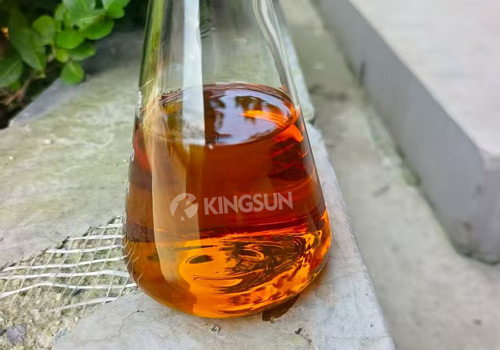
Triisopropanolamine (TIPA) 85% chemical is an important aliphatic tertiary amine compound. And its main component is triisopropanolamine, with the remaining 15% typically consisting of water and trace impurities. The appearance is usually a colorless to pale yellow transparent viscous liquid. Due to the 15% water content, its viscosity is slightly lower than that of the pure product. It has no noticeable irritating odor, or only a faint amine smell. With excellent water solubility, chelation ability, alkalinity, and catalytic properties, TIPA 85% can be widely used in industries such as cement grinding aids, metalworking, coatings, daily chemicals, and more.
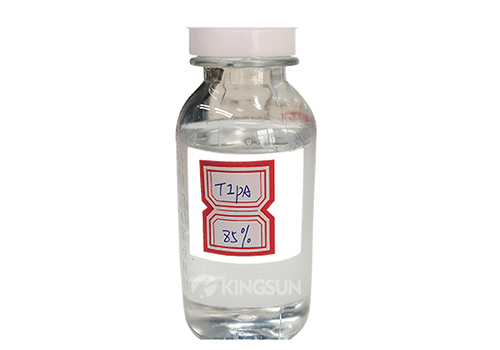
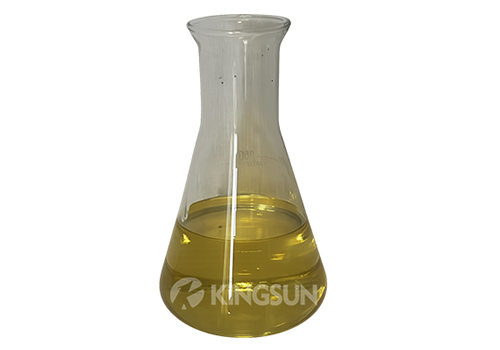
- Name: Triisopropanolamine (TIPA) 85%
- Appearance: colorless to yellow liquid
- TIPA Content %: ≥85.0
- CAS No.: 122-20-3
- Structure Formula: C9H21NO3
- EINECS NO.: 204-528-4

Technical Specifications of TIPA Liquid
| Item | Triisopropanolamine (TIPA) 85% |
| Appearance | Colorless to light yellow clear liquid |
| TIPA Content | ≥ 85% |
| Water Content | ≤ 15% |
| Density (20°C) | 1.06–1.08 g/cm³ |
| Viscosity (25°C) | Approx. 300–400 mPa·s |
| pH (10% solution) | 10.5–11.5 |
| Boiling Point | 305°C |
| Flash Point | 160°C |
| Solubility | 83g/100ml (20°C) |
Product Advantages of Triisopropanolamine (TIPA) 85%
- Strong Alkalinity and Buffering Capacity. TIPA 85% exhibits strong alkalinity, effectively adjusting the pH of various systems. It also provides stable buffering performance under acidic conditions, ensuring consistent product properties.
- Excellent Chelation and Complexing Ability. As a nitrogen-containing polyol, triisopropanolamine 85% forms stable complexes with metal ions, reducing their adverse effects and enhancing the stability of the formulation.
- High Water Solubility and Easy Compatibility. TIPA chemical is fully soluble in water and shows good compatibility with solvents, surfactants, and auxiliary agents, making it easy to incorporate into a wide range of aqueous systems.
- Enhanced Surfactant Performance. The product improves wetting, dispersing, and flow properties, resulting in better processing and application performance in coatings, inks, metalworking fluids, and other formulations.
- Effective Promoter and Catalytic Function. TIPA triisopropanolamine is widely used in cement grinding aids, where it enhances hydration, improves cement strength development, and increases grinding efficiency. It is an essential component in many composite additives.
- Good Thermal and Chemical Stability. This chemical remains stable under typical industrial conditions, showing good resistance to heat and oxidation, ensuring reliable storage and transportation.
-
Main Applications
-
Usage Guidelines
-
Storage & Transportation Requirements
(1) Cement Grinding Aid Industry
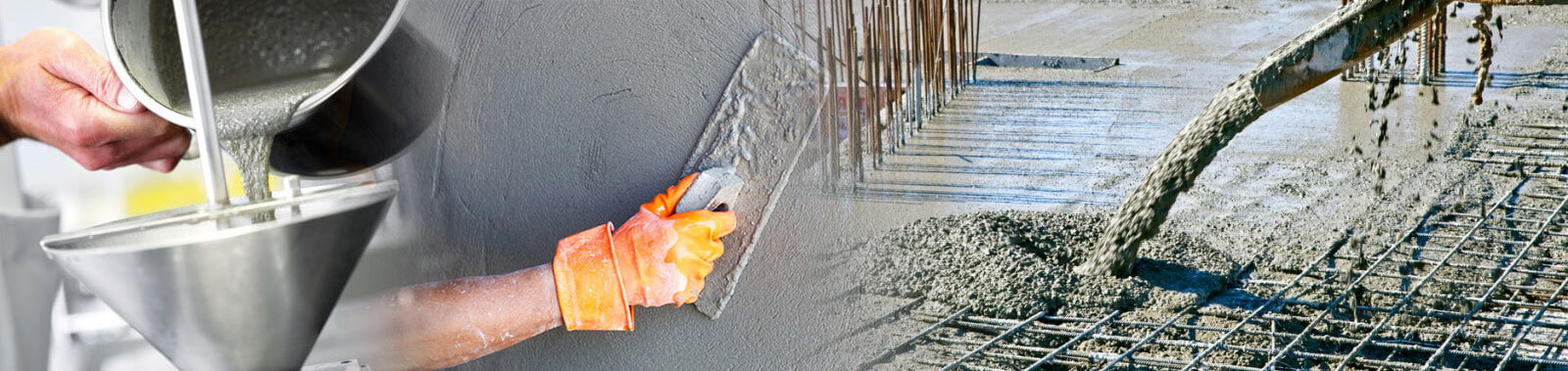
TIPA 85% is a key component in high-performance cement grinding aids, accounting for over 60% of the total amount used. Its mechanisms and advantages include:
- Grinding Aid Function: During the cement grinding process, TIPA chemical adsorbs onto the surface of cement particles, reducing friction and adhesion between particles, breaking up particle agglomeration, improving grinding efficiency, and reducing energy consumption (typically saving 10%-20% of energy), while also increasing cement output.
- Strength Enhancement: TIPA triisopropanolamine can react with free CaO, Al₂O₃, and other components in cement to form stable chelates, promoting the full hydration of cement and significantly improving both early (3-day) strength (an increase of 10%-15%) and later (28-day) strength (an increase of 5%-10%), particularly beneficial for high-strength cement production.
- Strong Compatibility: It blends well with other grinding aid components (such as ethylene glycol, diethanolamine, wood calcium, etc.) and can be adjusted according to different cement types (e.g., Portland cement, slag cement), making it widely applicable.
- Safety Precautions: TIPA 85% is a basic chemical. Always wear protective gloves and safety goggles during handling to prevent skin and eye contact.
- Trial Testing: Conduct small-scale trials in cement paste or concrete to identify the optimal dosage for each specific application.
- Compatibility: TIPA 85% works well with other admixtures. Verify compatibility in advance to achieve the desired set-retarding performance.
- Environmental Considerations: Dispose of residues and waste solutions in accordance with applicable local environmental regulations.
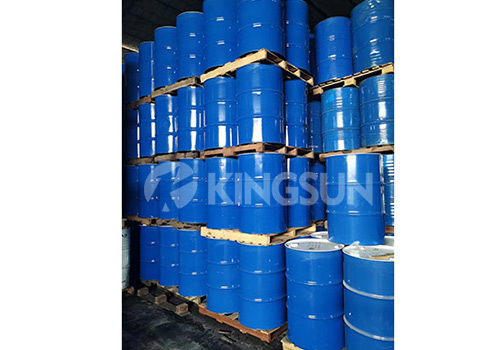
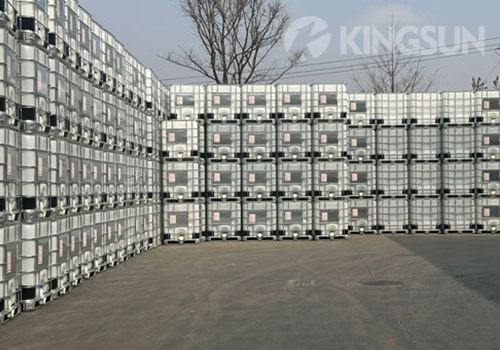
- Storage Conditions: TIPA 85% should be stored in a cool, dry, and well-ventilated warehouse, with the temperature controlled between 5-30°C. Direct sunlight and high temperatures should be avoided. The storage area should be kept away from open flames, heat sources, and areas where strong oxidizers or acids are stored. Storage containers should be made of corrosion-resistant materials, such as HDPE plastic drums or metal drums, and should be tightly sealed to prevent moisture evaporation and contamination from impurities.
- Transportation Requirements: During transportation, relevant hazardous material transport regulations should be followed (although 85% TIPA has relatively low danger, it should still be transported as a flammable liquid). Transport vehicles must be equipped with fire extinguishing equipment, and mixing or co-transporting with strong acids or oxidizers is strictly prohibited. Care should be taken when handling the product to avoid damage or leakage of containers. For winter transport, no special insulation measures are necessary, but long-term exposure to temperatures below -15°C should be avoided.
- Shelf Life: When stored under the appropriate conditions and in sealed containers, the shelf life is 12 months. After opening, the product should be used as soon as possible, and any remaining portion should be resealed.
Learn More Industrial Uses Here
TIPA 85% is commonly used in metal cleaning agents, where it effectively removes oil, grease, and metal oxides by forming soluble complexes. Its strong alkalinity enhances cleaning efficiency, making it suitable for degreasing and rust removal of mechanical parts, hardware, steel, and aluminum alloys. In water-based cutting fluids, TIPA 85% acts as a pH regulator, corrosion inhibitor, and stabilizer. It helps maintain a stable alkaline system, suppresses bacterial growth, forms a protective film on metal surfaces, and improves lubrication and fluid stability during machining.
The TIPA chemical functions as a latent curing agent for epoxy resin systems. It remains stable at ambient temperature and cures rapidly at elevated temperatures, producing coatings with excellent adhesion, chemical resistance, and durability. These properties make it suitable for industrial anti-corrosion coatings and floor coatings. In polyurethane and epoxy adhesives, TIPA 85% serves as a curing accelerator and crosslinking agent, improving curing efficiency, bond strength, heat resistance, and adhesion to polar substrates such as metals and ceramics.
Triisopropanolamine (TIPA) 85% is used in personal care products as a pH adjuster and emulsifier, improving formulation stability and product feel. It also serves as a functional intermediate in pharmaceutical synthesis, a textile softener and antistatic agent, and an absorbent for acidic gases such as CO₂ and H₂S in industrial gas treatment systems.
TIPA 85% Price Overview and Future Outlook
(1) Price Overview
The price of triisopropanolamine 85% mainly reflects raw material costs, market supply conditions, and downstream demand trends. As producers manufacture TIPA from propylene oxide and ammonia, changes in petrochemical feedstock prices directly affect production costs and, in turn, pricing levels. In general, market prices remain relatively stable; however, they may adjust according to order volume, packaging format, contract terms, and regional logistics. Consequently, price levels can differ across markets and application sectors.
(2) Market Development
At the same time, TIPA 85% continues to gain broader market acceptance due to its multifunctional performance. It plays an important role in cement and concrete admixtures, metalworking fluids, coatings, adhesives, and personal care formulations, where it supports pH control, corrosion protection, curing efficiency, and overall performance enhancement. Moreover, the steady growth of construction activity and industrial manufacturing further strengthens market demand and supports continuous expansion.
(3) Regional Trends
From a regional perspective, Asia-Pacific has become the primary growth engine for the triisopropanolamine (TIPA) market. Ongoing infrastructure investment, rapid urbanization, and increasing industrial output all contribute to rising consumption in this region. Meanwhile, North America and Europe maintain stable demand, with greater emphasis on high-performance, regulatory-compliant, and environmentally friendly chemical solutions.
(4) Future Outlook
Looking ahead, the TIPA chemical market demonstrates solid long-term potential. On the one hand, trends such as sustainable construction materials and low-emission cement systems continue to drive demand. On the other hand, advancements in coatings technology and eco-friendly metalworking fluids further expand application opportunities. In addition, continuous improvements in production efficiency and product consistency are expected to support stable growth and reinforce the long-term market relevance of TIPA 85%.
Why Choose Kingsun TIPA 85% Chemical
As a leading manufacturer and supplier of Triisopropanolamine (TIPA) 85% in China, Kingsun is committed to delivering consistently high-quality products, professional technical support, reliable service, and highly competitive factory-direct pricing to customers worldwide. For detailed specifications, technical support, or the latest price information, please feel free to contact us.