
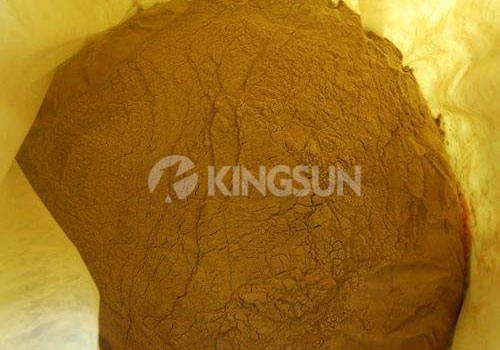
Sodium lignosulfonate (the sodium salt of lignosulfonic acid) is a natural polymer and an anionic surfactant. It typically appears as a brown powder or liquid and has no distinctive odor. The material is non-toxic, readily soluble in water and alkaline solutions, and precipitates under acidic conditions. It also offers strong dispersing properties.
As a versatile surfactant, sodium lignosulphonate (SLS) can undergo modification, processing, and formulation to produce various functional products. Its wide range of properties supports applications in concrete, cement, resins, rubber, dyes, pesticides, ceramics, asphalt, animal feed, water treatment, coal-water slurry, refractories, oilfield drilling, compound fertilizers, metallurgy, casting, and adhesives.
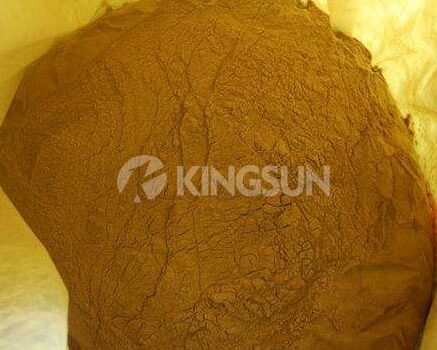 Sodium Lignosulphonate Powder
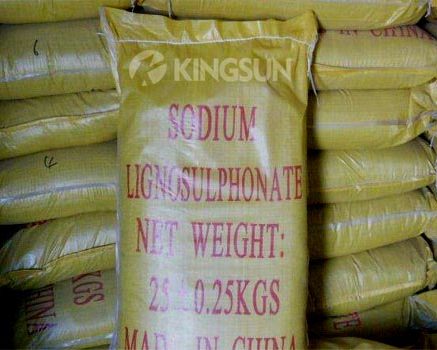 Kingsun Sodium Lignosulfonate
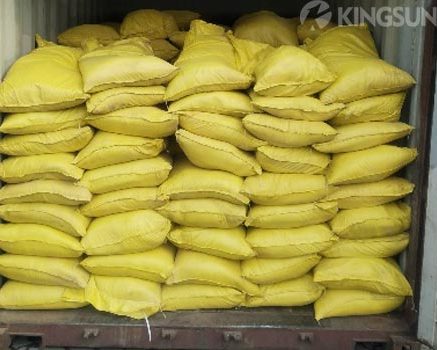 Sodium Lignosulfonate to Vietnam
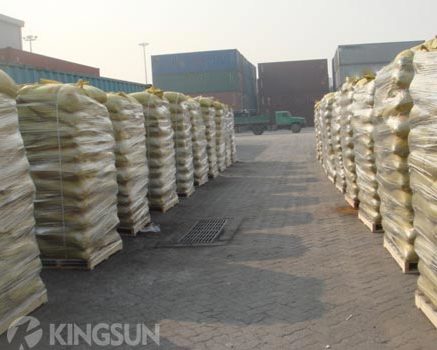 Sodium Lignosulphonate to Iraq
- Product Name: Sodium Lignosulfonate (SLS)
- Appearance: Yellow Brown Powder
- Dry Matter % : 92 min
- PH Value: 7.5~10.5
- CAS No.: 8061-51-6
- HS Code: 38040000
- Molecular Formula: C20H24Na2O10S2

Sodium Lignosulfonate As Concrete Water Reducer
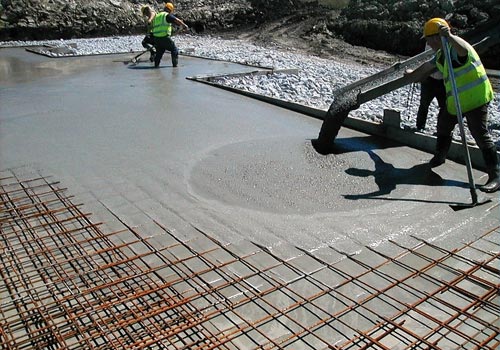
In concrete and building materials, sodium lignosulfonate can serve as a concrete water reducing admixture. It helps reduce water consumption while improving the fluidity and plasticity of concrete. In addition, sodium lignosulfonate can lower the initial heat of cement hydration. It also helps reduce concrete shrinkage and cracking. As a result, concrete can achieve higher compressive strength and improved durability.
The product also helps improve the microstructure of concrete. It promotes better cement particle dispersion and hydration, which supports the mechanical performance of the finished concrete. Furthermore, manufacturers can formulate sodium lignosulfonate powder into early-strength agents, retarders, antifreeze agents, and pumping agents.
Therefore, the construction industry represents one of the major application areas for sodium lignosulfonate. Its wide use comes from several practical advantages, including strong water-reducing performance, low slump loss, high strength, controlled setting, cost efficiency, and environmental benefits. These properties make sodium lignosulfonate a practical choice for various concrete applications.
Technical Specifications
| Items | Sodium Lignosulfonate |
| Appearance | Yellow Brown Powder |
| Dry Matter % | 92 min |
| Lignosulphonate % | 60 min |
| Moisture % | 7 max |
| Water-insoluble matter % | 0.5 max |
| Sulfate (as Na2SO4) % | 4 max |
| PH Value | 7.5-10.5 |
| Content of Ca and Mg % | 0.4 max |
| Total reducing matter % | 4 max |
| Content of Fe % | 0.1 max |
| Packing | Net 25kg PP bags; 550kg jumbo bags; |
- Performance Characteristics
- The mechanism action of lignin
- How to use it
1. Solubility and stability.Sodium lignosulfonate dissolves readily in water with different hardness levels and maintains stable performance across a wide pH range. Its excellent solubility supports consistent performance in various application environments. The aqueous solution also offers good chemical stability and biodegradability, while remaining stable during long-term storage. These properties support more environmentally responsible applications and sustainable development.
2. Dispersibility and adsorption. This product offers strong dispersing performance. It effectively disperses solid particles in aqueous media and helps form stable suspensions. Its performance comes mainly from the hydrophilic and hydrophobic groups in its molecular structure. These groups can adsorb onto particle surfaces and form a protective layer, helping prevent particle agglomeration.
Kingsun sodium lignosulfonate can adsorb onto the surfaces of various solid particles. It can also exchange metal ions and interact with other compounds through its active functional groups. These interactions may form condensation products or hydrogen bonds. As a result, sodium lignosulfonate offers useful adsorption and bonding properties for a wide range of industrial applications.
3. Environmental protection and sustainability. It is a biodegradable natural polymer that is environmentally friendly. No harmful substances are produced during use, and it is easy to recycle and treat.
The raw materials of sodium lignosulphonate come from a wide range of sources, mainly from lignin, a by-product of the pulp and paper industry. By sulfonating it, it can be converted into high-value-added chemicals to achieve resource recycling and sustainable development.
4. Other properties. Sodium lignosulphonate powder also has a certain degree of bonding and can be used for bonding and molding of powdered and granular materials such as iron ore powder and lead-zinc ore powder. In addition, it also has multiple functions such as wetting, emulsification, and dispersion, and is also widely used in printing and dyeing, papermaking, petroleum, geological exploration and other fields.
When sodium lignosulfonate enters concrete, its hydrophobic groups adsorb onto the surface of cement particles, while its hydrophilic groups remain oriented toward the aqueous phase. This arrangement forms a monomolecular or multimolecular adsorption layer around the cement particles. The layer gives the particles similar surface charges, causing them to repel each other and disperse more evenly. As the particles separate, excess water moves into the surrounding mixture. This process helps reduce the amount of water required in concrete.
At the same time, sodium lignosulfonate reduces the surface tension of water and the interfacial tension between cement particles. As a result, concrete requires less water while maintaining the same level of fluidity. This effect further enhances its water-reducing performance. In addition, Kingsun sodium lignosulfonate powder helps control cement hydration and reduce concrete porosity. Consequently, it increases concrete compactness and improves both compressive strength and impermeability. Furthermore, these effects contribute to better overall concrete performance.
- During the construction process, we must strictly control the dosage. Once the amount of sodium lignin sulfonate is too large, it may cause the coagulation time to be significantly prolonged.
- Product delay increases significantly as temperature decreases. The lower the temperature, the slower the strength increase.
- Sodium lignosulfonate powder dissolves readily in water and can form aqueous solutions with concentrations of 1%–50%. First, add water to the container. Then, quickly add the sodium lignosulfonate powder while stirring continuously. This method helps prevent agglomeration and speeds up dissolution. Finally, use the prepared solution within ten days to help prevent mold growth.
- Before use, we need to carry out the adaptability test of the cement variety. This is because concrete water reducers must be tested and meet the technical requirements before they are put into engineering use.
- For concrete that contains entrained air, excessive air content can affect its performance. Therefore, if the air content becomes too high, adjust the vibration time or use other suitable defoaming measures. In this way, the concrete can achieve the required air content and meet the relevant technical requirements.

More Applications
(1) In the printing and dyeing industry, sodium lignosulfonate acts as a dispersant and filler for vat dyes and disperse dyes. As a primary raw material in Dispersant NNO, it helps improve dye dispersion, enhance color strength, promote more uniform coloring, and shorten grinding time.
(2) In pesticide processing, it acts as a filler, dispersant, and suspending agent, enhancing the suspension rate and wetting performance of wettable powders.
Adding this product in the process of preparing coal water slurry can increase the output of high mill, maintain the normal state of pulping system, reduce the power consumption of pulping, increase the concentration of coal water slurry, and reduce the oxygen consumption and coal consumption in the gasification process. The efficiency of cold gas is improved, and the viscosity of coal-water slurry can be reduced to achieve certain stability and fluidity.
In the manufacturing process of large-scale wall and floor tiles and refractory bricks, the raw material particles of the body can be firmly bonded, and the strength of the dry body can be increased by more than 20%-60%.
It serves as a binder for briquetting iron ore powder, lead-zinc ore powder, pulverized coal, and coke powder. It also supports cast iron and cast steel sand mold production, as well as the extrusion molding of mud bricks and floor tiles. For mineral material briquetting, it provides high strength, good stability, and effective mold lubrication.
In drilling operations, sodium lignosulfonate acts as a diluting dispersant and viscosity reducer, improving fluidity during crude oil transportation and helping lower energy consumption. In petroleum products, it serves as a cleaning agent, dispersant, high-alkaline additive, antirust agent, antistatic agent, emulsifying viscosity reducer, wax remover, and anti-wax agent.
Kingsun - Leading Sodium Lignosulphonate Manufacturer & Supplier
With increasing global attention to sustainable development and environmental protection, the demand for green and biodegradable materials is growing across various industries. Sodium lignosulfonate is derived from natural lignin and is biodegradable, meeting environmental requirements. In industries such as papermaking, construction, and agriculture, using sodium lignin sulfonate to replace traditional non-degradable or highly polluting additives helps reduce environmental pollution and achieve sustainable development.
(1) As a professional manufacturer and supplier in China, Henan Kingsun chemical Co., Ltd. has more than 15 years’ experiences in construction chemicals industry. In addition, we also provide high quality sodium lignosulfonate, sodium gluconate, PCE superplasticizer, sodium naphthalene superplasticizer and calcium lignosulphonate,etc.
(2) Kingsun has its own factory and raw materials, as well as advanced production lines, so we can guarantee the sufficient supply and deliver goods on time.
(3) Kingsun exports its products to more than 30 countries and regions, including Turkey, Saudi Arabia, the UAE, South Africa, Jordan, Russia, Peru, Bangladesh, South Korea, India, Indonesia, Thailand, Philippines, Vietnam, Malaysia, Singapore, Pakistan, Bahrain, Mexico, Chile, Israel, Qatar, and Brazil,etc.