
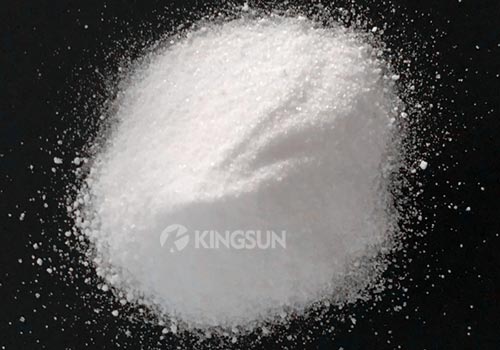
Sodium gluconate, also known as the sodium salt of gluconic acid, is an organic substance with the chemical formula C6H11NaO7. It is a white powder, non-toxic, and good in thermal stability. So it is very soluble in water, slightly soluble in alcohol, insoluble in ether. Moreover, sodium gluconate always plays an important role in many fields, such as construction industry, textile printing and dyeing, food industry, medical industry, electroplating and film manufacturing and so on. Obviously, its application prospect is very broad.
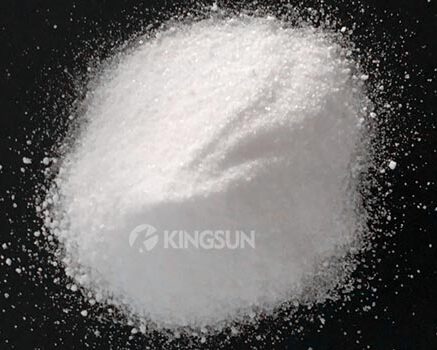 Sodium Gluconate Powder
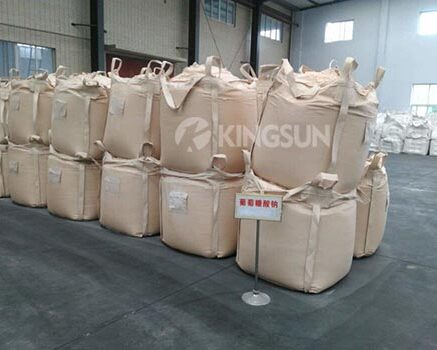
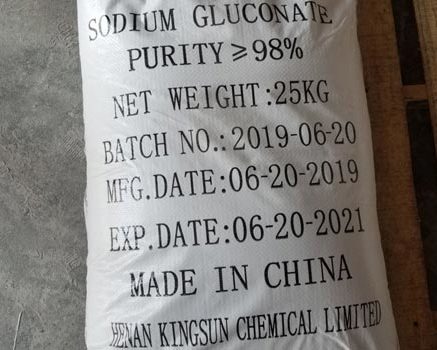 Sodium Gluconate Package
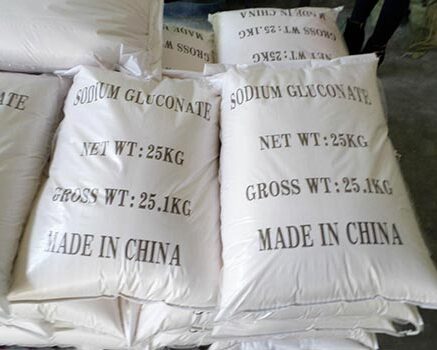 Sodium Gluconate Manufacturer
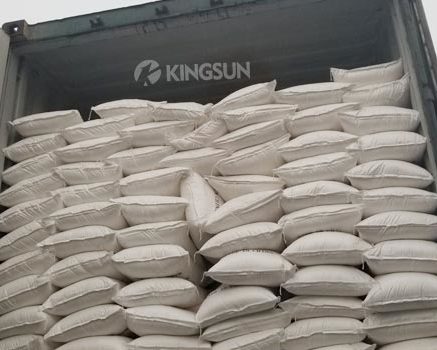 Kingsun Sodium Gluconate For Sale
 Sodium Gluconate to Korea
- Other Name: sodium salt of gluconic acid
- Appearance: White crystalline powder
- Purity %: 98% Min
- Tech Grade: Industrial/Food grade
- PH Value: 6.2~7.5
- CAS No.: 527-07-1
- HS Code: 29181600.00

Application of Sodium Gluconate 98%
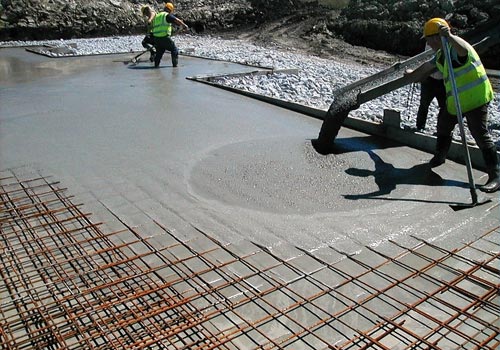
In construction industry, sodium gluconate can act as concrete retarder admixture and water reducing admixture. When adding a certain amount of sodium gluconate 98% min to the cement, it can increase the plasticity and strength of the concrete. Moreover, it can significantly delay the initial and final setting time of concrete. When the dosage is less than 0.15%, the logarithm of the initial solidification time is directly proportional to the dosage. That is, doubling the dosage will delay the initial solidification time to ten times, which extends the operable time of concrete. It is especially important for long-term and difficult pouring projects without affecting the final strength of the concrete.
Technical Specifications
| Item | Sodium Gluconate |
| Appearance | White crystalline powder |
| Purity % | 98 Min |
| Loss on drying % | 0.50 Max |
| Sulfate (SO42-) % | 0.05 Max |
| Chloride (Cl) % | 0.07 Max |
| Heavy metals (Pb) ppm | 10 Max |
| Reduzate (D-glucose) % | 0.7 Max |
| PH (10% water solution) | 6.2~7.5 |
| Arsenic salt(As) ppm | 0.2 Max |
| Packing & Loading | 25 kg/PP bag, 26tons in 20’FCL without pallets; 1000kg/Jumbo bag on a pallet, 20MT in 20’FCL; 1150kg/Jumbo bag on a pallet, 23MT in 20’FCL; |
- Performance Advantages in Concrete Applications
- Main Features
- Enhance workability. When the ratio of water to cement (w/c) remains unchanged, adding sodium gluconate can improve the workability of concrete, act as a plasticizer, and improve the cohesion and resistance to segregation and bleeding of concrete. Give concrete a better slump.
- Increase intensity. When the cement content remains constant, adding an appropriate amount of sodium gluconate to the concrete and the water content is reduced (i.e. w/c is reduced) can increase the strength of the concrete to a certain extent.
- Cement reduction. On the premise of maintaining the performance of concrete, sodium gluconate can be used as a cement reducer to reduce the amount of cement and reduce the production cost of concrete.
- Good adaptability. Sodium gluconate has good adaptability to different types of cement and concrete mix ratios. Whether it is ordinary Portland cement, slag Portland cement or other special cement, it can be effectively used with sodium gluconate to exert a stable retarding effect. At the same time, for concrete of different strength grades, sodium gluconate can also be reasonably adjusted according to actual needs to meet the requirements of various projects.
- Improve the durability of concrete. Its retarding effect helps to reduce cracks caused by excessive hydration heat during the hardening process of concrete. Concrete releases a lot of heat during the hydration reaction. If the heat cannot be dissipated in time, it will cause the internal temperature of the concrete to rise, generate temperature stress, and thus cause cracks. Sodium gluconate 98% can reduce the hydration reaction rate and reduce the generation of hydration heat, thereby reducing the risk of concrete cracking. In addition, sodium gluconate can also improve the impermeability and frost resistance of concrete, further enhancing the durability of concrete.
- Easy to operate and control. In the concrete production process, the addition amount of sodium gluconate is relatively easy to control. The optimal amount of addition can be determined through experiments based on specific construction requirements and concrete performance requirements. At the same time, sodium gluconate has good dispersibility in concrete and can be quickly mixed with cement and other admixtures to ensure the stability and consistency of the retarding effect. At the construction site, the amount of sodium gluconate can also be fine-tuned according to actual conditions to adapt to different construction conditions and environmental changes.
- Excellent dispersibility. Sodium gluconate can effectively disperse cement particles and make them more evenly distributed in water. This is because it can be adsorbed on the surface of cement particles to form a protective film with negative charge, which prevents cement particles from agglomerating through electrostatic repulsion, thereby improving the fluidity of concrete. During the concrete mixing process, the addition of water reducer enables concrete to maintain good fluidity at a lower water-cement ratio, which is convenient for construction operations, especially for some concrete projects with complex structures, such as high-rise buildings and large-span bridges, which can ensure that concrete is poured smoothly in place.
- Retarding effect. Kingsun sodium gluconate 98% is not only a high-efficiency water reducer, but also has a certain retarding effect. It can slow down the hydration reaction rate of cement and prolong the setting time of concrete. This is very beneficial for concrete that is constructed in a high temperature environment or needs to be transported for a long time. Under high temperature conditions, the hydration reaction rate of concrete is accelerated, which can easily lead to premature coagulation of concrete and affect the construction quality. The retarding effect of sodium gluconate can effectively control the setting time of concrete, ensuring that the concrete has enough time for pouring, vibrating and plastering during the construction process. At the same time, the retarding effect can also reduce the risk of cracks in concrete caused by excessive hydration heat and improve the durability of concrete.
- Good compatibility with other admixtures. This product has good compatibility with other concrete admixtures such as air entraining agent, retarder, and early strength agent. In the concrete production process, sodium gluconate can be used in combination with other admixtures according to different engineering requirements to achieve better performance effects. For example, the combination with air entraining agent can improve the frost resistance of concrete; the combination with retarder can further extend the setting time of concrete; the combination with early strength agent can ensure the early strength of concrete while not affecting the development of its later strength.
- Environmental protection. It is a non-toxic, harmless, green and environmentally friendly admixture. It will not pollute the environment during production and use, which meets the requirements of modern society for environmental protection. At the same time, the use of sodium gluconate can reduce the amount of cement, reduce energy consumption and carbon dioxide emissions in the concrete production process, and has positive significance for achieving sustainable development.
- Economic Benefits. Although the price of sodium gluconate is relatively high, when used as a water reducer, it can achieve good concrete performance at a lower water-cement ratio, thereby reducing the amount of cement used. In addition, due to its slow setting effect, it can reduce the loss of concrete during transportation and construction and improve the utilization rate of concrete. Comprehensively considered, the use of sodium gluconate as a water reducer can reduce the production cost of concrete to a certain extent and improve economic benefits.

In the water treatment industry, sodium gluconate provides effective corrosion and scale inhibition. As a result, it serves as a water quality stabilizer in various water treatment systems. For example, users can apply it to circulating cooling water systems in petrochemical facilities, low-pressure boilers, and internal combustion engine cooling systems. In addition, its chelating properties help control metal ions and support stable water quality.
Sodium gluconate has an alkaline pH and strong chelating properties. It also supports the breakdown and removal of contaminants. As a result, cleaners formulated with this chemical offer strong decontamination performance. They can remove industrial oil and dust, bottle labels, and water stains from bottle surfaces. In addition, the product provides useful descaling and rust-removal properties.
When used as a metal surface cleaner, it removes oil and other contaminants from equipment and plated parts. It also helps improve surface finish and prevents hydroxides such as iron and lead from precipitating in the cleaning solution. Furthermore, its chelating properties help maintain a cleaner solution and support strong adhesion between the coating and steel surface. Therefore, it can meet specialized cleaning requirements for rhodium, chrome, tin, and nickel plating.
The chemical also works well in glass bottle cleaning applications. It helps remove contaminants from nozzles, pipes, bottle labels, and bottlenecks, including rust and oil stains. In addition, manufacturers can incorporate it into cleaning formulations for fruits and vegetables. Its chelating properties can help remove certain trace inorganic residues, including phosphate-related contaminants, when the formulation and cleaning process are properly designed.
In the medical field, sodium gluconate can contribute to electrolyte and acid-base balance in specific medical formulations. These functions support normal physiological processes, including fluid balance and neuromuscular activity.
In addition, certain medical formulations may use it as a source of sodium and gluconate ions. Its role depends on the formulation, dosage, and specific clinical application. Therefore, manufacturers should select the appropriate grade and follow applicable medical and pharmaceutical requirements.
Furthermore, it may serve as a nutritional or electrolyte supplement in specific applications. However, healthcare professionals should determine its appropriate use and dosage according to individual requirements.
Sodium gluconate can form complexes with metal ions that may affect the appearance and stability of cosmetic formulations. Its chelating properties make it useful in a variety of cosmetic and personal care products. In addition, it helps control metal ions and maintain formulation stability.
- Shampoos and Cleansers. Formulators add this ingredient to shampoos and cleansers to bind hard-water ions. As a result, it can support better lathering and improve the overall washing experience.
- Toothpaste. Manufacturers may include it in toothpaste to sequester calcium ions and help maintain formulation stability.
- Soaps and Face Creams. It can also serve as a functional ingredient in soaps and face creams, where its chelating properties support product stability and performance.
As a food additive, sodium gluconate provides a mild and balanced salty taste. Its flavor profile closely resembles that of table salt, while its taste threshold exceeds that of many other organic acid salts. In addition, it produces little bitterness or irritation, making it suitable for food formulations that require a clean and well-balanced taste.
(1) Salt Replacement. This ingredient can serve as part of a reduced-sodium formulation. Its saltiness resembles that of table salt, while its sodium content is lower than that of sodium chloride. Therefore, formulators can use it to adjust salty flavor while managing the overall sodium level of a food product. In addition, its low bitterness and mild taste help maintain a pleasant sensory profile.
(2) Flavor Enhancement. Flavor plays an important role in the sensory quality of food. This ingredient can help mask certain bitter notes and improve overall taste balance. As a result, it can enhance the flavor profile of selected food products and support a smoother sensory experience.
Professional Sodium Gluconate Manufacturer & Supplier
If you are looking for professional China sodium gluconate manufacturer & supplier, then Henan Kingsun Chemical Co., Ltd. is a good choice for you. As a professional construction chemicals manufacturer in China. Kingsun has its own factory, the most advanced fully automatic production line and raw materials. And the annual output of sodium gluconate can reach 120,000 tons. Therefore, we can provide the sufficient goods and competitive factory prices for our clients.
Kingsun has a very good reputation in domestic and foreign markets, and has established long-term cooperative relations with many new and old customers. At present, our products have been exported to around 60 countries, including Qatar, Pakistan, Bahrain, Mexico, Chile, Israel, Brazil, Turkey, Saudi Arabia, UAE, South Africa, Jordan, Russia, Peru, Bangladesh, South Korea, Indonesia, Thailand, Philippines, Vietnam, Malaysia, Singapore, india, etc.
By the way, if you have any questions or you would like to know the latest sodium gluconate price, please contact us online or leave a message below, we will be happy to help you. Welcome to cooperate with us!
Main Advantages of Kingsun Company
-
With More Than 15 Years' Experience in Construction Chemicals Industry
Kingsun always tries its best to make the business become professional & simple & easy.
-
Good Quality
All of our products have passed various certifications, such as ISO, SGS, etc.
-
One-to-one service
We will provide professional pre-sales and after-sales services for you.
-
Timely Response
We treat all the customers' feedback seriously and promptly and respond to customers within 24 hours.