
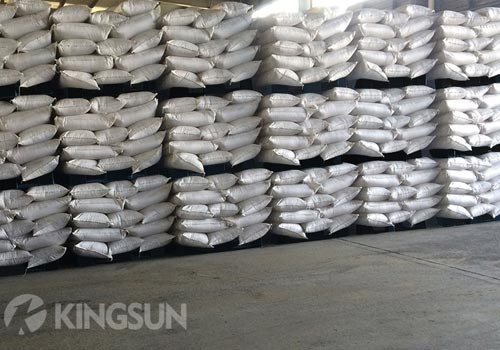
Naphthalene sulfonate formaldehyde (NSF), also known as sulfonated naphthalene formaldehyde (SNF), polynaphthalene sulfonate (PNS), is the sodium salt of the condensation product of naphthalene sulfonic acid and formaldehyde. Chemically referred to as naphthalene sulfonate formaldehyde condensate, it is an anionic, non-air-entraining high-range water reducing admixture, and is classified as a first-generation concrete superplasticizer.
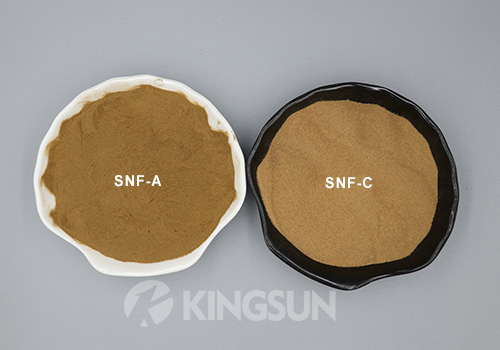
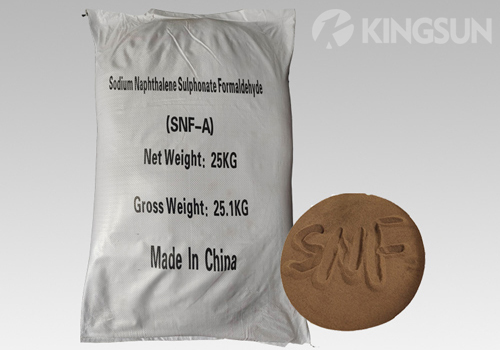
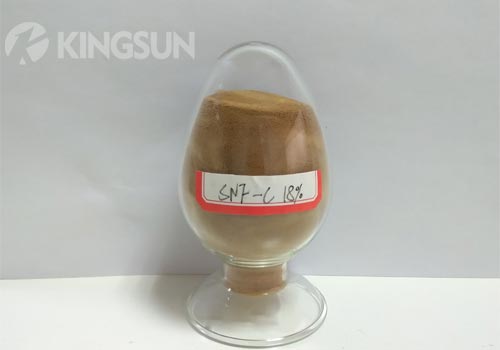
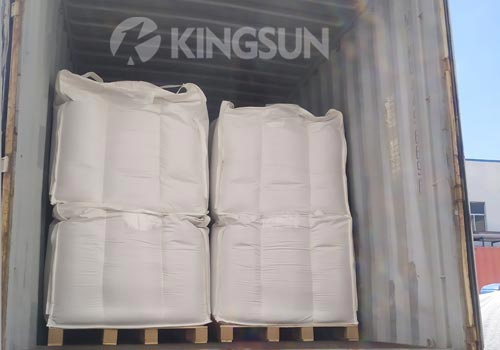
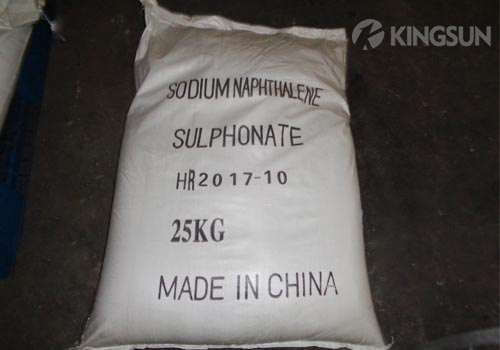
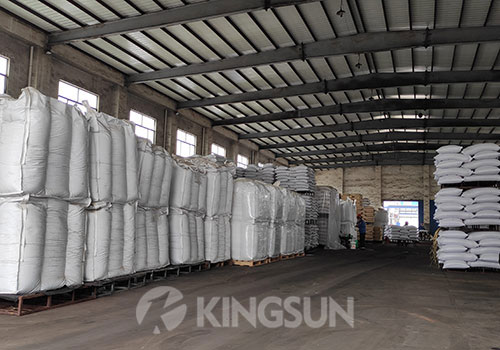
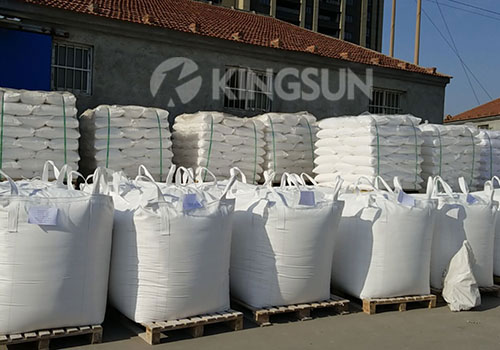
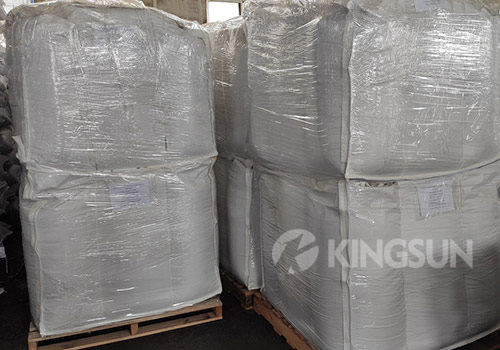
- Product: NSF Superplasticizer
- Appearance: Light Brown Powder
- Man Types: SNF-A & SNF-C
- Solid Content (%) ≥: 92
- PH Value: 7~9
- Water Reducing Rate(%): 25
- CAS No.: 36290-04-7

NSF superplasticizer provides excellent water-reducing and dispersing performance. When used at appropriate dosage levels, it significantly reduces the mixing water demand, enhances concrete workability and density, and improves both early and ultimate compressive strength. It also allows cement savings and helps to lower the heat of hydration while maintaining consistent slump and flowability.
Product Specifications
| Type | SNF-A | SNF-B | SNF-C |
| Solid Content (%) ≥ | 92% | ||
| PH Value | 7-9 | ||
| Na2SO4 Content (%)≤ | 5 | 10 | 18 |
| Chlorine Content (%)≤ | 0.3 | 0.4 | 0.5 |
| Net Starch Fluidity(mm)≥ | 250 | 240 | 230 |
| Water Reducing Rate(%) | 26 | 25 | 23 |
| Packing | 25kg pp bag; 650kg Jumbo bag. A customized package is available. | ||
Key Features of Naphthalene sulfonate formaldehyde (NSF)
1. High Water Reduction and Material Efficiency
The naphthalene sulfonate formaldehyde superplasticizer can reduce cement consumption by 10–25% without compromising concrete strength or workability. By effectively lowering the water-to-cement ratio, it increases the density and compactness of concrete. For example, in high-strength concrete, SNF helps minimize internal voids caused by excess water, thus improving structural stability and durability.
2. Significant Early Strength Enhancement
NSF naphthalene sulfonate formaldehyde accelerates the early strength development of concrete, achieving strength increases of 20–60% compared with control mixes. It performs well in steam-cured and cold-weather concrete, enabling the mix to reach the required strength in a shorter time and shortening construction cycles.
3. Excellent Compatibility
Compatible with various types of cement, including Ordinary Portland Cement (OPC), slag Portland cement, and fly ash Portland cement. It also blends well with most other concrete admixtures, making it an ideal base ingredient for compound admixtures, such as retarding or pumping agents.
4. Notable Limitations
The main drawback of NSF superplasticizer is its rapid slump loss over time. Concrete slump can decrease by nearly 40% within 30 minutes, making it difficult to maintain a slump above 160 mm for more than two hours. Additionally, naphthalene sulfonate superplasticizer is not suitable for ultra-high-strength concrete (above C60), which limits its application in large-scale or high-performance engineering projects.
-
Main Application Areas
-
Usage Notes
-
Packaging and Storage
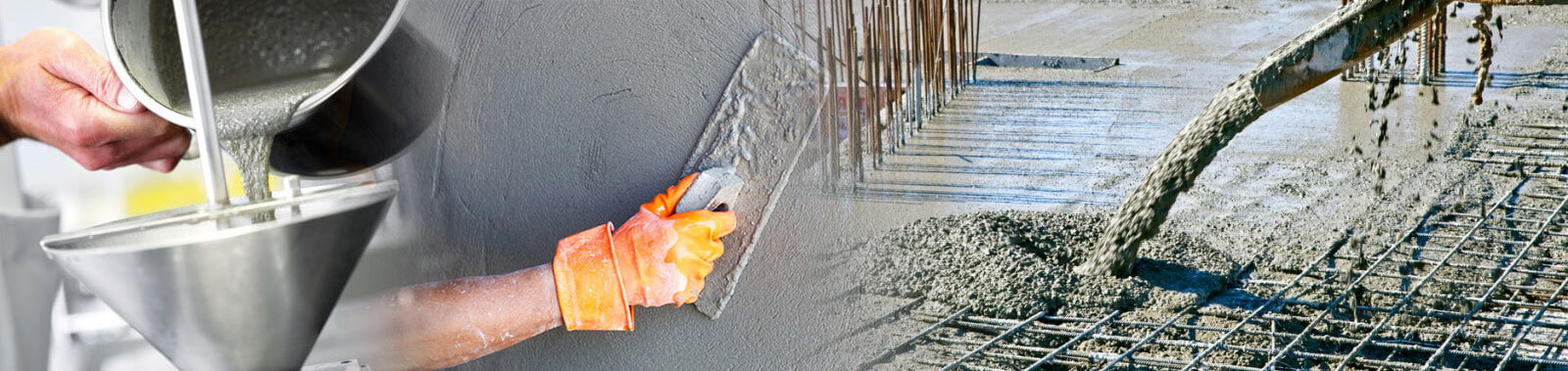
Due to its stable performance, cost-effectiveness, and broad compatibility, naphthalene sulfonate formaldehyde (NSF) has long been the mainstream superplasticizer in China and many international markets. It is widely applied in ready-mix concrete (RMC), precast and steam-cured concrete components, bridges, tunnels, ports, subways, and road construction, high-strength, high-flow, and self-compacting concrete systems,etc.
1. Construction Engineering. Widely used in industrial and civil construction projects for cast-in-place and precast concrete components such as beams, columns, and slabs. It is compatible with both steam curing and natural curing processes, helping concrete elements achieve faster strength development and form stability.
2. Large-Scale Infrastructure Projects. The NSF superplasticizer plays an important role in major infrastructure applications such as highways, bridges, tunnels, dams, ports, and terminals.
SNF enables the production of high-flowability and pumpable concrete, meeting the requirements of on-site casting and long-distance pumping.
3. Special Concrete Formulations. Suitable for preparing early-strength concrete, impermeable concrete, and waterproof concrete. It can also be used as a base material for producing various compound admixtures, such as retarding water reducers, pumping agents, and antifreeze admixtures.
4. Other Industrial Applications. Beyond the construction sector, SNF superplasticizer is also used as a binder, dispersant, and thickening agent in industries such as foundry, papermaking, and asphalt modification, improving the performance and processing characteristics of related materials.
1. Precise Dosage Control
The dosage of SNF must be accurately controlled to ensure optimal performance:
SNF powder form: 0.75% – 1.5% of the cement weight
SNF liquid form: 1.5% – 2.5% of the cement weight
Both overdosing and underdosing may adversely affect the concrete’s workability, setting time, and strength development.
2. Slump Retention Considerations
Due to its relatively fast slump loss, SNF is not recommended for projects requiring long-term flowability retention (e.g., large-scale pumping or mass concrete).
To extend slump retention time, it should be combined with a slump-retaining component or admixture. Avoid using SNF alone under such conditions, as forced application may lead to extended setting times or inconsistent performance.
3. Mixing Procedure Recommendations
When porous aggregates are used, it is recommended to pre-wet the aggregates before adding SNF.
This prevents excessive absorption of the admixture by the aggregates, ensuring consistent dispersion and effectiveness.
During casting, if the initial slump is high, vibration time should be properly controlled to prevent bleeding or segregation of the concrete mixture.
- Packaging: 25kg plastic-lined woven bags (SNF powder); 200kg or 1000kg plastic drums (SNF liquid).
- Storage: Store in a cool, dry place, avoiding direct sunlight and moisture to prevent clumping.
- Shelf Life: 12 months for SNF powder, 6 months for SNF liquid.
- Transportation: Transport as non-hazardous goods, protecting from rain and packaging damage.
In summary, the development of sulfonated naphthalene formaldehyde (SNF) marked a significant milestone in the evolution of concrete admixture technology—a transition from conventional water-reducing agents such as lignosulfonates or sugar-based reducers to high-range water reducing admixtures. It also laid the foundation for the later development of polycarboxylate ether (PCE) superplasticizers, which represent the new generation of high-performance concrete admixtures. Even today, naphthalene sulfonate formaldehyde (NSF) superplasticizer remains one of the most widely used and cost-effective superplasticizers worldwide, continuing to play a vital role in advancing the progress and innovation of concrete admixture technology.